
Exploring Various Types of Barcodes: A Visual Guide
Barcodes are indispensable in today’s world, enabling seamless product identification and tracking. While the ubiquitous black and white barcode lines are well-known, there exist various barcode formats, each serving distinct purposes. This guide delves into the fundamentals of barcodes and explores the unique characteristics of different types such as EAN-13, UPC, and QR code, showcasing their visual differences and applications.
Understanding the Basics: What are Barcodes?
Barcodes are a system of parallel lines with variable thickness and spacing, encoding information that a scanner reads and converts to a digital format. The most widespread barcodes globally are EAN-13 and UPC, often found on retail products and comprising 12 or 13 numerical digits. These barcodes are crucial for inventory control, supply chain management, and retail operations.
Barcodes are engineered to be easily read by barcode scanners using laser technology, streamlining inventory and sales tracking for businesses. Besides UPC codes, other barcodes like QR codes—which are square-shaped and capable of storing more information—also exist, revolutionising modern business operations.
Delving into Different Barcode Types
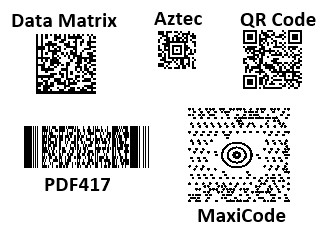
Barcodes come in various types, each uniquely designed for specific purposes. For example, QR codes (Quick Response codes) can store extensive data and are used widely in marketing, advertising, and ticketing. Another type is the DataMatrix code, a two-dimensional barcode that holds information both vertically and horizontally.
Code 128 is a high-density barcode frequently employed in shipping and packaging industries, encoding alphanumeric characters for diverse applications. Similarly, the PDF417 barcode can store large amounts of data in a compact form. Recognising the variety of barcode types can aid businesses in optimising their processes and enhancing efficiency.
For businesses, barcodes are fundamental in inventory management, supply chain operations, and efficiency enhancement. Understanding the basics and exploring various barcode types allows businesses to choose the most suitable system for their needs. Whether it’s a conventional EAN-13 or UPC barcode for retail products or a QR code for marketing, barcodes play a vital role in contemporary business practices. Assessing the features and advantages of each barcode type is essential for informed decision-making.